

Introduction
In the pantheon of figures who shaped the South African liberation struggle, Dan Tloome, known affectionately to his comrades as “Uncle Dan,” stands as a key but often overlooked architect of resistance. A trade unionist, an ANC stalwart, and a committed communist, his life was a testament to the fight for a non-racial, democratic South Africa.
This first post in a five-part series explores the formative experiences of his youth—the quiet observations and shocking encounters with brutality that ignited his political consciousness and set him on a lifelong path of activism.
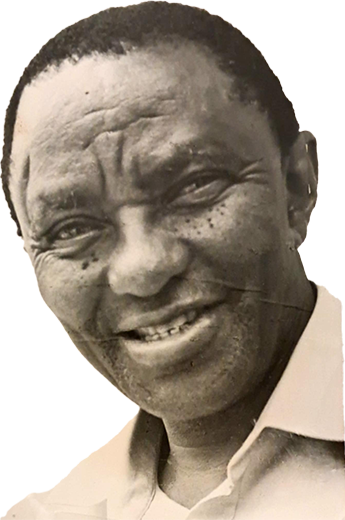
A Clergyman’s Son in a Divided Land
Born on February 17, 1919, in Bloemfontein, Daniel Tloome was the son of a clergyman in the Congregational Church. Due to his father’s profession, the family moved frequently, exposing the young Tloome to different communities across the country. His father’s politics were deeply intertwined with his faith, a worldview Tloome would later describe as the “type of politics that you’ll find in Tutu”. He told his son stories about the suffering of people on the farms, planting the seeds of awareness.
Yet, this awareness revealed a subtle but crucial tension between father and son. While the elder Tloome believed that such injustices “should be solved, you know, by God,” Dan “started questioning certain things.” This divergence marked the beginning of Tloome’s independent, action-oriented thinking, a departure from his father’s faith-based resignation and the genesis of a revolutionary in the making.
An Awakening in Johannesburg
When his family eventually moved to Johannesburg, Tloome found that “life was more lively there.” This raw exposure to the system’s brutality was not merely an observation; it became the catalyst for his life’s work. It was in Johannesburg that the daily injustices of the pass laws and segregation made a profound impact on him. He observed how people were arrested “in great numbers every day,” taken to what was then called the “Native Commissioner’s Court,” and summarily sentenced. He watched as hundreds of people, their passes or taxes deemed “out of order,” were taken from the city each month to work on farms, their liberty stripped away by a bureaucratic pen stroke.
A Defining Moment: “I felt it was inhuman”
One particular practice he witnessed crystallized the true nature of the system and sealed his commitment to the struggle. It was the fate of those arrested under the pass laws who were sent to perform forced labor on certain farms.
“Now what really touched me of all was the – a certain farm where, you know, these people were told to go and dig potatoes with their hands, you know, their nail – their fingers and so on… that really touched me – I felt it was inhuman”
This moment was a political epiphany for Tloome. He realized the system was not merely about racial prejudice; it was a form of brutal “economic exploitation” carried out under the “cloak of, you know, passes”. The cruelty was not incidental but a feature of an economic engine that ran on the coerced labor of African people. It was a system that dehumanized its victims for profit, a reality he felt could never be reconciled with a just society. As he reflected, “that’s not the way, you know, that you could develop human beings, you know, to make them responsible citizens”.
Conclusion
These early encounters with the inhumanity of forced farm labor were not just passing observations for Dan Tloome. They were the spark that ignited a lifetime of political commitment. The sight of people digging potatoes with their bare hands was an image of exploitation so stark that it drove him to abandon the prospect of a stable career and dedicate his life to the trade union movement—the frontline, he believed, in the fight for both economic justice and human dignity.
Discover more from Ariobex
Subscribe to get the latest posts sent to your email.